Southwestern Proving Ground
Some interesting excerpts from the Internet.The excerpt is from the Internet address above the excerpt.
The news of construction on a proving ground in Hope became official in June of 1941. The Real Estate Department
of the War Department was in charge of acquiring land by filing condemnation proceedings against the tract and
then taking possession of those sections they required to begin immediate work. After the initial evacuation order
the War Department decided they needed more room for an airport so they added more acres. In the end 404
families were relocated by a deadline of July 24th. Callahan Construction Company was awarded the job of erecting
the proving ground by the War Department and the hiring of 4,000 construction workers began July 15th. Senator
Spencer and the project director, W.K. Mellyor, agreed upon a guarantee of preferential treatment of local citizens in
considerations for jobs.
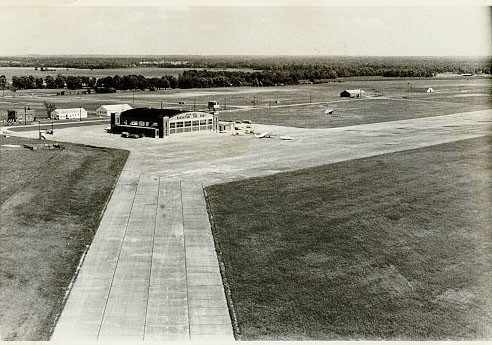
When the airport was completed it had the third longest runway in the United States. Opening day festivities were
postponed because of the bombing of Pearl Harbor on December 7th, 1941. Testing began in January 1942 and
Hempstead County residents were finally allowed within the gates of the proving ground in April.
__________________________
Southwestern Proving Ground Formerly Used Defense Site
Restoration Advisory Board (RAB)
Meeting #4, Hope, Arkansas
September 25, 2003
An estimated $18 billion will be required to clean up these sites. The budget for remediating these sites is
approximately 190 million per year. At this rate it will take about 80 years to clean up these known sites. Since
Southwestern Proving Grounds is a large site, remediation will be an extended process.
When an official map of the proposed site was published, it revealed that 244 individuals and firms owned the
property.
What seem to be a minor setback, turned into a long property dispute. The original plan of the Real Estate
Department was to acquire the land within a month’s time, but some of the landowners didn’t see it that way.
Although some of the landowner’s sold their land with no problem, most were reluctant to sell and they had a good
reason to be. For most of this people, their land was their lively-hood. They lived and farmed on this land, in most
cases, the landowners were poor, and if they were kicked off their land, they had nowhere to go.
The landowners were also getting the support of the citizens of Hope. Many of the citizens of Hope tirelessly
petitioned the U.S. government to halt the activities on the establishing of the proving ground. These petitions
requested that the proving ground be relocated to land that is less populated and less fertile. But their cries fell
upon deaf ears. The reason the U.S. Army gave for wanting the land was that the location did not include any main
highways, crossed the railroad once, and it took in no town. It was revealed also that 937 acres of the affected area
were state owned. (Hope Star 2,).The land was officially condemned on July 1, 1941.
The plight of Luther Nelson 67, a farmer of 30 years, was reported in the Hope Star. He had no place to go. His
landlord had notified him to move from his home in the heart of the proving ground. He had searched for a place,
contacted the Federal Security Association in the courthouse, and they told him it would be Monday before they
could talk with him. And that was three days from deadline.
Aid did come. Representative Talbot Feild Jr. reported that Governor Adkins' office assure him that 45 National
Guard tents would be in Hope by the weekend. W. B. Nelson of Washington, owner of 20 acres of land nearby,
offered farmers this space to erect tents if they did not have a place to go. He said there was plenty of running water
and they could stay as long as they wanted free.
Several issues of the Hope Star were filled with front page photographs of the drama of families in "Exodus," as
Editor Washburn called it in the headlines, showing wagons loaded with household furnishings, abandoned homes,
and sad people. Then, twenty Army trucks from the 110th Quartermaster Regiment, 35th Division, Second Army,
Little Rock, arrived to help with the move. The drivers were under the command of Lt. Melvin Amen.
The drivers reported moving 68 families, using 43 men. They drove 5,442 miles, carried 236 loads, burned 1,277
gallons of gas.
By September 13 it was reported that the Hempstead County Relocation Office had received 335 requests for
assistance, 247 of which were grant applicants, 28 were loan applications, 55 were requests for help in finding a
location and 15 were long-term tenant purchase loans.
In its August 1, 1941 issue, the Washington Telegraph revealed that a half dozen families were living in the 1874
Courthouse at Old Washington after losing their homes to the proving ground.

ANNOUNCEMENT PAGE
Page under construction
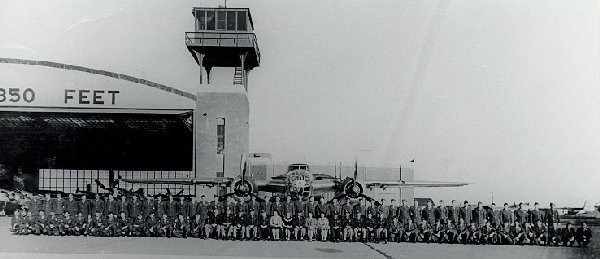
Troops at hanger
Runway
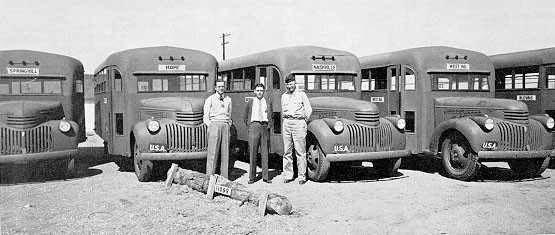
Transportation for workers